As National Debate Over Postpartum Psychosis Grows, Behind The Joy Centers Black Mothers
International award-winning film explores postpartum psychosis, stigma and support through a Black family’s experience,

Press Release Disclaimer: This is a press release distributed through the XPR Media network. It has not been independently verified by our newsroom.
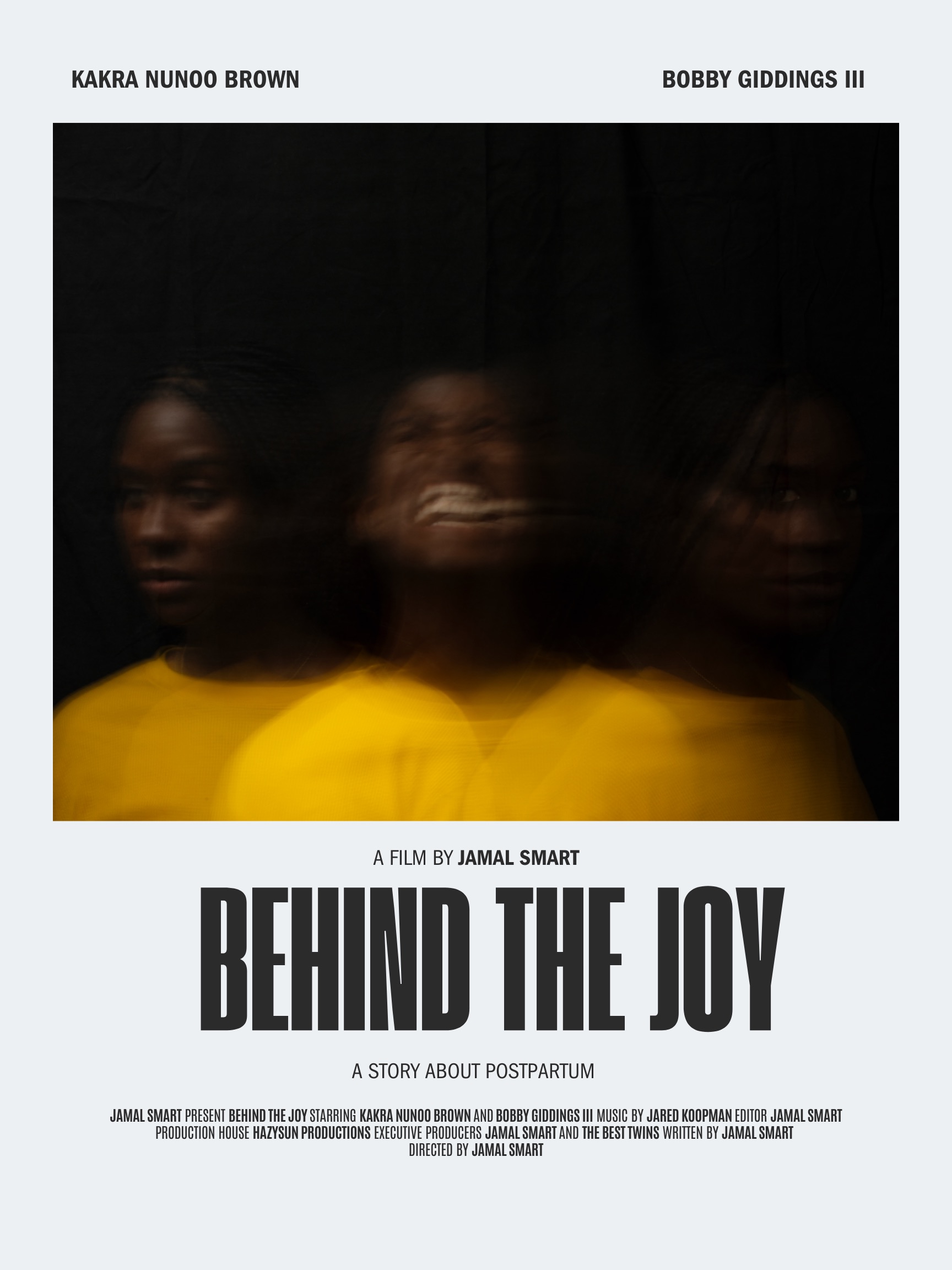

International award-winning film explores postpartum psychosis, stigma and support through a Black family’s experience, asking whose pain gets seen.
NEW YORK, NY, UNITED STATES, September 15, 2026 /EINPresswire.com/ — NEW YORK, Sept. 15, 2026 — As postpartum psychosis and maternal mental health after childbirth continue to generate national conversation, award-winning filmmaker Jamal Smart is asking: When a mother is experiencing a mental-health crisis, whose pain gets seen, understood and supported?
Smart’s feature film, Behind The Joy, places postpartum mental health inside a Black family and explores what can happen when warning signs are minimized or dismissed.
The film follows Naomi, a new mother whose emotional and psychological health deteriorates after childbirth while her partner, family and friends struggle to understand what she is experiencing. Early in the story, a nurse identifies Naomi as being at high risk for postpartum depression. As her condition worsens, audiences enter her distorted reality through “Evil Naomi,” a manifestation of frightening thoughts attacking her sense of worth, motherhood and safety.
Behind The Joy is fictional and is not presented as a clinical diagnosis. Instead, it depicts the escalation of severe postpartum mental illness, including psychosis-like experiences, and how stigma and the expectation that mothers should simply be “strong” can delay recognition of a crisis.
According to the National Institute of Mental Health, postpartum psychosis is a serious mental illness that can include delusions, hallucinations, mania, paranoia and confusion, and is a psychiatric emergency requiring immediate treatment. The U.S. Office on Women’s Health notes that it is rare, occurring in approximately 1 to 4 out of every 1,000 births, and often begins within the first two weeks after childbirth.
For Smart, that conversation raises another question: Would a Black woman experiencing the same level of mental-health crisis receive the same effort to understand what happened to her mentally before people decided who she was?
“When maternal mental health becomes part of the national conversation, I keep asking whether we extend the same understanding, compassion and urgency to Black women,” Smart said. “Behind The Joy is not about excusing harm. It is about recognizing warning signs before a family reaches a point of tragedy.”
A 2024 study available through the National Institutes of Health’s PubMed database found that among people experiencing early postpartum depressive symptoms, non-Hispanic Black respondents were significantly less likely than non-Hispanic White respondents to receive postpartum mental-health care.
Since its release, Behind The Joy has grown into a maternal mental-health education and impact initiative. The film has received more than 20 awards and honors, including a Bronze Telly Award and Best Impact Feature recognition. It has screened at Hofstra University, Stony Brook University, Northwell Long Island Jewish Forest Hills-supported programming, CUNY’s York College, community events and Rikers Island.
The film has also been used in PhD-level academic work and in educational and training conversations connected with Postpartum Support International to help audiences recognize warning signs and discuss Perinatal Mood and Anxiety Disorders.
Behind The Joy has received a Certificate of Recognition from the New York City Mayor’s Office for its community impact surrounding maternal mental-health awareness.
In July 2026, Fulton County, Georgia, issued a proclamation recognizing Behind The Joy Appreciation Day, honoring the film’s work to advance Black maternal health and postpartum awareness. Fulton County Behavioral Health & Developmental Disabilities and Black Girls Mental Health Foundation also participated in the Atlanta premiere activation, connecting attendees with behavioral-health resources and support.
“We should not have to wait until a mother or child becomes a headline before we start talking about postpartum mental health,” Smart said. “Behind The Joy was created to start that conversation earlier—in homes, hospitals, schools and communities—when there is still time to hear someone asking for help.”
Through screenings, academic discussions and community partnerships, Smart hopes Behind The Joy can continue challenging audiences to look beyond the image of a happy new mother and recognize the person who may be struggling behind the joy.
Asking for help is a step towards joy.
For screening opportunities, partnerships, interviews and additional information, visit BehindTheJoy.com.
Jamal Smart
Behind The Joy
info@behindthejoy.com
Visit us on social media:
Instagram
YouTube
WATCH THE TRAILER:
Legal Disclaimer:
EIN Presswire provides this news content “as is” without warranty of any kind. We do not accept any responsibility or liability
for the accuracy, content, images, videos, licenses, completeness, legality, or reliability of the information contained in this
article. If you have any complaints or copyright issues related to this article, kindly contact the author above.

Media gallery